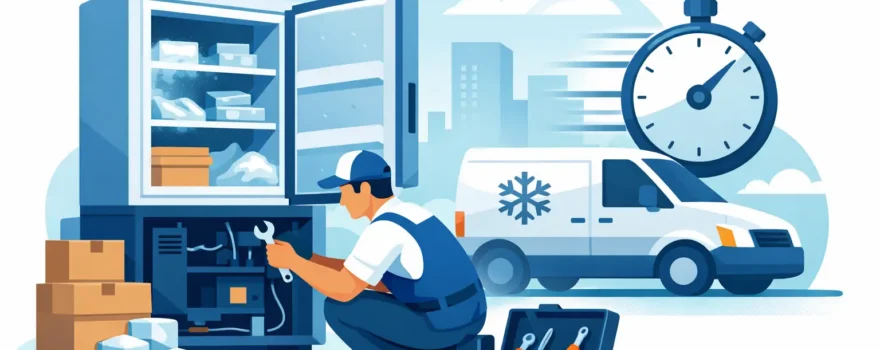
A freezer failure usually starts with something small – soft ice cream, a puddle under the door, food that feels colder than the fridge but not truly frozen. Then it turns into a real problem fast. When you need on site freezer repair service, you are not looking for a long explanation or a shop across town. You need a technician who can come out, diagnose the issue at your home or business, and tell you exactly what it will take to get the unit working again.
That is why on-site repair matters. A freezer is not the kind of appliance most people can load into a car, drop off somewhere, and wait a week to get back. For homeowners, that means spoiled groceries and a major disruption at home. For restaurants, offices, break rooms, and small businesses, downtime can turn into lost product and lost money very quickly.
Why on site freezer repair service makes sense
Most freezer problems need to be diagnosed where the appliance sits. Temperature performance, airflow, power supply, leveling, door seal condition, and frost buildup all depend on the real environment around the unit. A shop can test components, but it cannot always recreate what is happening in your kitchen, garage, office, or commercial space.
An on site freezer repair service saves time at both ends. There is no hauling, no arranging transportation, and no guessing whether moving the appliance will create more problems. A trained technician can inspect the freezer in place, check the full cooling system, and narrow down whether the issue is electrical, mechanical, airflow-related, or tied to a failed part.
Just as important, you get a clear answer sooner. If the repair is straightforward, many problems can be handled during the same visit if parts are available. If a special-order part is needed, you still know what failed, what the next step is, and what the cost looks like before work moves forward.
Common problems an on site freezer repair service can fix
Freezers do not all fail the same way. Some stop cooling altogether. Others keep running but never reach the right temperature. In many cases, the warning signs show up before a full breakdown.
A common call starts with excess frost. If frost is building up on the inside walls, around drawers, or near the evaporator cover, the problem may involve the defrost system, a worn door gasket, or moisture getting in through a door that is not sealing correctly. This can look minor at first, but left alone it can choke airflow and reduce cooling performance.
Another frequent issue is a freezer that runs constantly. That does not always mean it is doing its job. It can point to dirty condenser coils, a failing thermostat, weak door seals, a sensor problem, or trouble with the compressor or start components. The unit may sound active while food slowly softens.
Leaks and pooling water are also common service calls. Sometimes the drain is blocked. Sometimes defrost water is not moving where it should. Sometimes the issue is tied to ice buildup or a temperature problem causing unusual condensation. The exact cause matters, because fixing the symptom without fixing the source usually means the leak comes back.
Then there are the sudden failures – no power, clicking noises, buzzing, warm interior temperatures, or a freezer that trips breakers. These cases need prompt attention, especially when the appliance stores bulk food, medical items, or business inventory.
Upright, chest, built-in, and commercial freezer issues
Not every freezer is built the same, and diagnosis has to match the equipment. Upright freezers often present airflow and defrost issues differently than chest freezers. Built-in units can have tighter ventilation requirements and more complex installation constraints. Commercial freezers may face heavier usage, more frequent door openings, and greater pressure to get back in service quickly.
That is one reason broad brand and model experience matters. The repair approach for a basic household unit is not always the same as the approach for a premium built-in model or a hard-working business freezer in a commercial setting.
What to expect during an on site freezer repair service visit
A good service call should feel straightforward. First comes the diagnostic. The technician inspects the freezer, checks the symptoms you have noticed, and tests the parts and systems most likely tied to the problem. That can include temperature readings, continuity checks, fan and compressor behavior, defrost components, door seal condition, and control issues.
After the diagnosis, you should get a clear explanation in plain language. Not a vague guess. Not pressure. Just what failed, whether repair is the smart move, and what the cost looks like before the work begins.
This matters because not every freezer repair is the same value. If a newer freezer has a bad thermostat, fan motor, or door gasket, repair is often the obvious choice. If an older unit has sealed system trouble or a major compressor issue, the answer may depend on the age of the appliance, the part cost, and whether the freezer is residential or commercial. A reliable company will tell you that honestly.
At Coastal Fix Appliance Repair, the process is built around on-site diagnostics and transparent estimates. If you move forward with the repair, the service-call fee is waived. That pricing structure works well for customers who want a real diagnosis first, then a simple go-or-no-go decision.
When same-day freezer repair matters most
Some appliance problems can wait a day or two. Freezer problems usually do not have that kind of flexibility. The longer a freezer sits above safe temperatures, the more likely it is that food quality drops or inventory is lost.
For households, the urgency is practical. Families keep bulk groceries, meal prep, frozen baby food, and backup supplies in a freezer because it saves time and money. When that appliance fails, replacing spoiled food can cost more than people expect.
For property managers, a broken freezer can quickly become a tenant satisfaction issue. For small businesses, especially food service operations, the stakes are higher. Product loss, interrupted service, and health compliance concerns make fast response more than a convenience.
That is where same-day and emergency availability become valuable. Not every repair can be completed instantly, because parts availability and the exact failure both matter. But fast dispatch, quick diagnosis, and immediate next steps can make the difference between a manageable repair and a much bigger loss.
How to know if you should repair or replace the freezer
This is where people often want a simple rule, but the real answer depends on the unit. Age matters. Brand matters. The failed component matters. So does how the freezer is used.
If the issue involves a replaceable part and the freezer is otherwise in solid condition, repair is usually worth considering. That is especially true for newer household units and many commercial systems where replacement costs are high. If the freezer has repeated cooling issues, significant rust, insulation damage, or a major sealed system failure on an older unit, replacement may be the better investment.
The right technician will not push one answer every time. They should explain the trade-off clearly: repair cost now, likely lifespan after repair, and whether another major issue is likely in the near future. That kind of straight answer saves customers from throwing good money after bad.
Choosing a local on site freezer repair service
Speed is only part of the equation. You also want a company that works where you are, knows the area, and can respond without turning your appointment into an all-day mystery. For customers in North Los Angeles County and Ventura County, local coverage matters because fast service is only fast if the technician can actually get to you.
It also helps to choose a repair company that handles both residential and commercial service and works across major appliance brands. Freezer issues do not happen on a schedule, and it is easier when one company can handle a garage freezer at home, a built-in kitchen unit, or a commercial freezer at a small business without making you start over with someone else.
Good service should also feel professional from start to finish. That means clear communication, realistic arrival expectations, honest diagnostics, and repair work backed by warranty on parts and labor when applicable. Customers remember that just as much as the fix itself.
If your freezer is warming up, frosting over, leaking, or making unusual noise, waiting rarely improves the outcome. The most useful next step is to get it looked at where it stands, by someone who can diagnose the issue quickly and tell you exactly what comes next. A fast, local repair visit can save your food, your time, and a lot of frustration.

Post a Comment