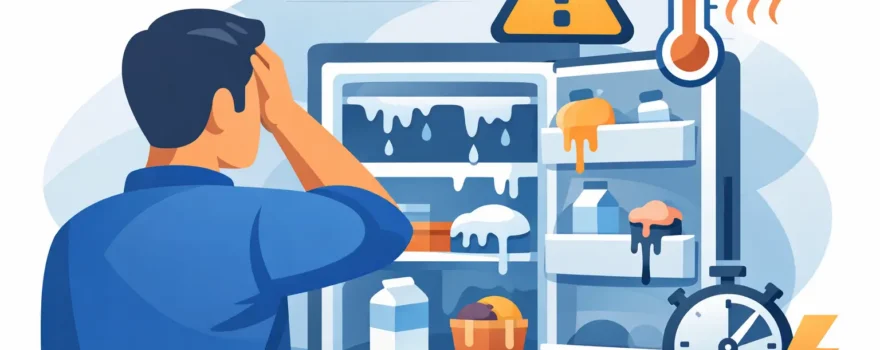
That moment when the refrigerator goes quiet – or worse, starts clicking, leaking, or warming up – can turn into a real problem within hours. If you are wondering how to handle refrigerator breakdown without losing food, damaging the unit, or wasting time on guesses, the right move is to act fast, stay calm, and focus on a few checks that actually matter.
A refrigerator failure is rarely just an inconvenience. For homeowners, it can mean spoiled groceries, water on the floor, and a kitchen thrown off for the day. For property managers and small businesses, downtime can create tenant complaints, product loss, or health concerns. The good news is that not every breakdown means a full replacement, but waiting too long can turn a smaller repair into a larger one.
How to handle refrigerator breakdown in the first hour
Start with food safety. Keep the refrigerator and freezer doors closed as much as possible. A closed refrigerator can usually hold a safe temperature for about 4 hours, while a full freezer can stay cold much longer if it remains unopened. Every unnecessary door opening lets cold air out and shortens that window.
Next, check the power source before assuming the appliance itself has failed. Make sure the cord is firmly plugged in. Look for a tripped breaker. If the outlet seems questionable, test it with another small device. In some cases, what looks like a refrigerator breakdown is actually a power issue, especially after a storm, outlet overload, or kitchen circuit problem.
Then look at the control settings. It sounds basic, but temperature dials can get bumped, especially in busy households, rentals, or shared commercial spaces. If the refrigerator is running but not cooling well, an accidental setting change is worth ruling out before moving further.
If the interior lights are on but cooling has stopped, listen carefully. A steady hum can point to one issue, repeated clicking to another, and total silence to something else entirely. You do not need to diagnose the full problem yourself, but noting what the unit is doing helps narrow things down quickly when a technician arrives.
Signs the problem may be serious
Some refrigerator issues can wait a few hours for a scheduled visit. Others need same-day attention. If the refrigerator is completely warm, the freezer is thawing, there is a burning smell, water is pooling underneath, or the compressor is making loud clicking or buzzing noises, the problem should be treated as urgent.
Commercial users should move even faster. A refrigerator problem in an office break room is one thing. A cooling failure in a restaurant, café, or any business storing perishable product is a time-sensitive service call. Lost inventory adds up quickly, and so does the risk of storing food at unsafe temperatures.
There is also the age factor. If your refrigerator is older and has had recent cooling issues, frost buildup, or cycling problems, a full breakdown may be part of a larger wear pattern. That does not always mean replacement is the better option, but it does mean professional diagnosis matters.
What you can safely check before calling for repair
A few basic checks are useful. Beyond that, trying to force a fix can make things worse.
Look at the condenser area if it is accessible. Dirty condenser coils can cause poor cooling and strain the system. If they are packed with dust and pet hair, careful cleaning may help performance. Unplug the refrigerator first and use a coil brush or vacuum gently. If the unit is still not cooling after power is restored, the issue is likely deeper than airflow.
Check the door seals. Torn or loose gaskets let warm air in and make the refrigerator work harder. If the door is not closing properly because of a warped gasket, overpacked shelves, or an uneven floor, temperatures can rise fast. This is a fixable problem in many cases, but it is different from a complete no-cool failure.
Also check for blocked vents inside the refrigerator and freezer. Overloading the compartments can stop cold air from circulating. If one section is cold and the other is warm, airflow restrictions or a fan issue may be involved.
What you should not do is start taking panels off, handling electrical parts, or trying internet fixes that involve bypassing components. Modern refrigerators, especially Samsung, LG, GE, Whirlpool, Bosch, KitchenAid, Viking, Thermador, and other major brands, often involve control boards, sensors, sealed systems, and specialized parts. Guessing can raise repair costs instead of lowering them.
Common causes of refrigerator breakdown
When people ask how to handle refrigerator breakdown, they usually also want to know why it happened. The answer depends on the symptoms.
If the unit has power but no cooling, the issue may be the compressor, start relay, evaporator fan motor, condenser fan motor, thermostat, or control board. If the freezer is cold but the refrigerator section is warm, airflow problems, a failed fan, or a defrost issue are more likely. If there is heavy frost buildup, the defrost heater, thermostat, or timer may be involved.
Water leaks can come from a clogged or frozen defrost drain, a damaged water line, or excessive condensation caused by poor sealing. A refrigerator that clicks repeatedly and does not fully start may have a relay or compressor problem. A unit that runs constantly may be dealing with dirty coils, a failing gasket, low refrigerant, or sensor trouble.
This is where professional diagnosis saves time. Several different failures can create the same symptom. Warm milk and soft freezer items do not tell you which part is actually bad.
When to call for professional refrigerator repair
Call as soon as basic checks are done and the refrigerator is still not cooling correctly. If the unit is leaking, making unusual sounds, tripping the breaker, or showing signs of electrical trouble, stop there and schedule service. Fast response matters because refrigerators do not give you much room to wait.
A good repair visit should be straightforward. The technician diagnoses the problem on-site, explains what failed, and gives you a clear quote before work moves forward. That matters when you are dealing with food loss, tenant complaints, or business interruption. You need answers, timing, and pricing without a lot of back-and-forth.
For local customers in North Los Angeles County and Ventura County, that is where a same-day and emergency service model makes a difference. Coastal Fix Appliance Repair handles on-site refrigerator diagnostics and repair for residential and commercial customers, with service designed for urgent breakdowns and no unnecessary delay.
Repair or replace? It depends on the numbers
Not every broken refrigerator should be repaired, but many should. The right decision usually comes down to age, repair cost, brand, part availability, and the overall condition of the appliance.
If the refrigerator is newer and the issue is a fan motor, thermostat, gasket, drain problem, or relay, repair is often the practical move. If the unit is much older and has a sealed system or compressor issue, replacement may make more financial sense. Built-in and premium models are a separate category because their replacement cost is much higher, which often makes repair more worthwhile.
There is no one-size-fits-all rule. A proper diagnosis helps you compare real numbers instead of guessing based on the appliance simply being old or inconveniently broken.
How to reduce food loss while you wait
If service is scheduled but the refrigerator is still down, protect what you can. Keep the doors closed. Move high-risk items like dairy, meat, and leftovers into a cooler with ice if temperatures are rising. If the freezer still holds temperature, use it strategically for anything that can stay frozen safely.
Do not refreeze food that has fully thawed and warmed above safe temperatures. That is where trying to save groceries can create a bigger problem. When in doubt, err on the side of caution.
For businesses, separate usable product from questionable product early and document losses if needed. Quick decisions matter more than perfect ones when refrigeration fails in a commercial setting.
The best approach is fast, local, and practical
The real answer to how to handle refrigerator breakdown is not to panic and not to delay. Check power, protect the food, rule out simple issues, and get a professional diagnosis quickly if cooling does not return. Refrigerators are too essential to leave in a maybe-it-fixes-itself category.
A broken refrigerator disrupts the whole day, but the next step should be simple. Get help from a local repair team that can come to you, explain the problem clearly, and get the unit back to work if repair makes sense. When the response is fast and the diagnosis is honest, the situation gets easier right away.
If your refrigerator fails, treat the first few hours like they matter – because they do. A quick, professional response can be the difference between a manageable repair and a much more expensive mess.

Post a Comment